
Do I need a website if I have Instagram?
Instagram is great for discovery, but it isn’t yours. What a website does that social media can’t — and when you might not need one yet.
Read articleWebsites
You don’t need a huge website to look professional. You need the right few pages, each doing a clear job. Here’s what to include — and what can wait.
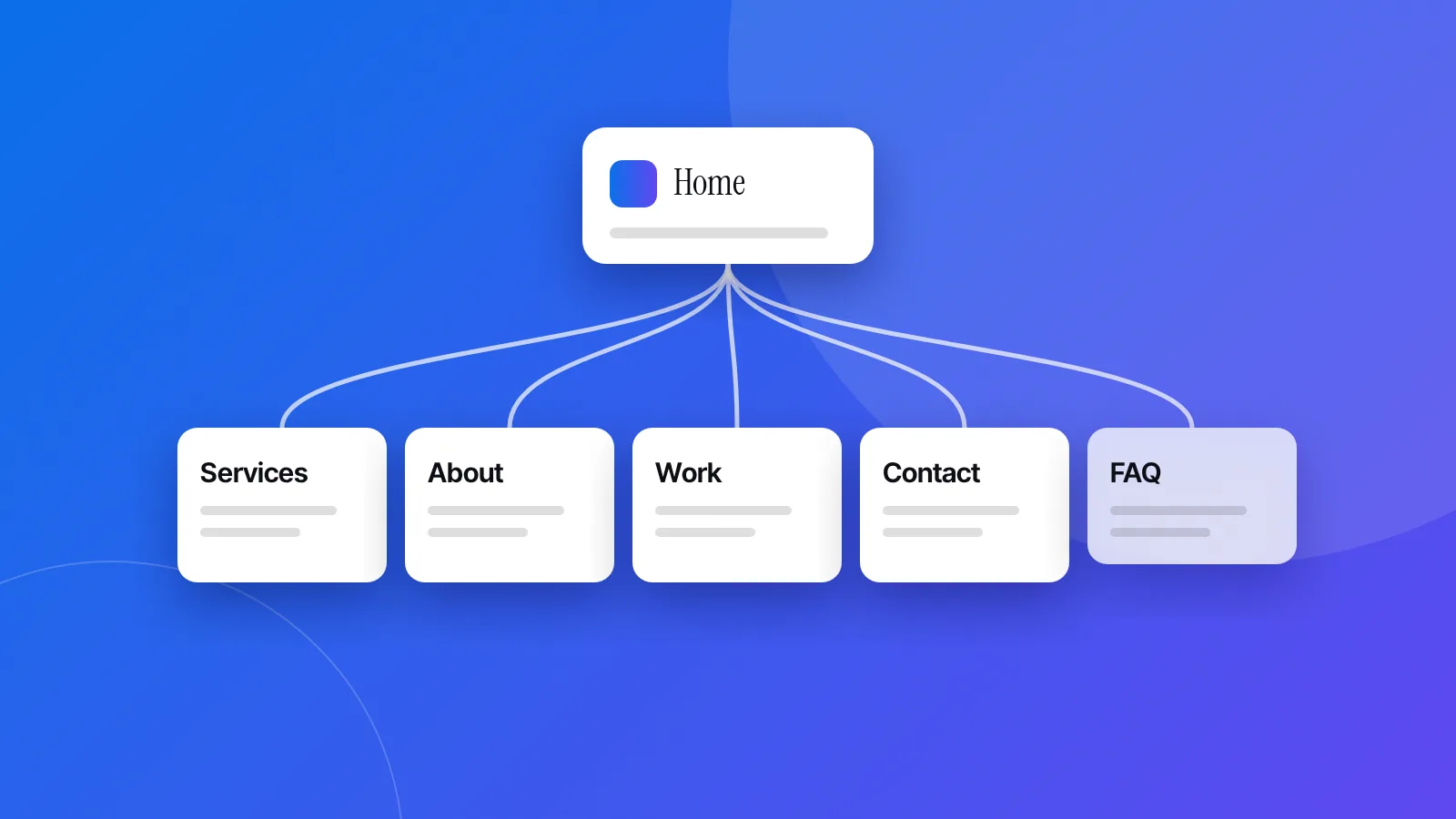
Before thinking about pages, list the questions a new customer asks before choosing you: What exactly do you do? Is it right for me? Can I trust you? What does it involve? How do I get in touch? Each page on your website should answer one or more of those questions clearly.
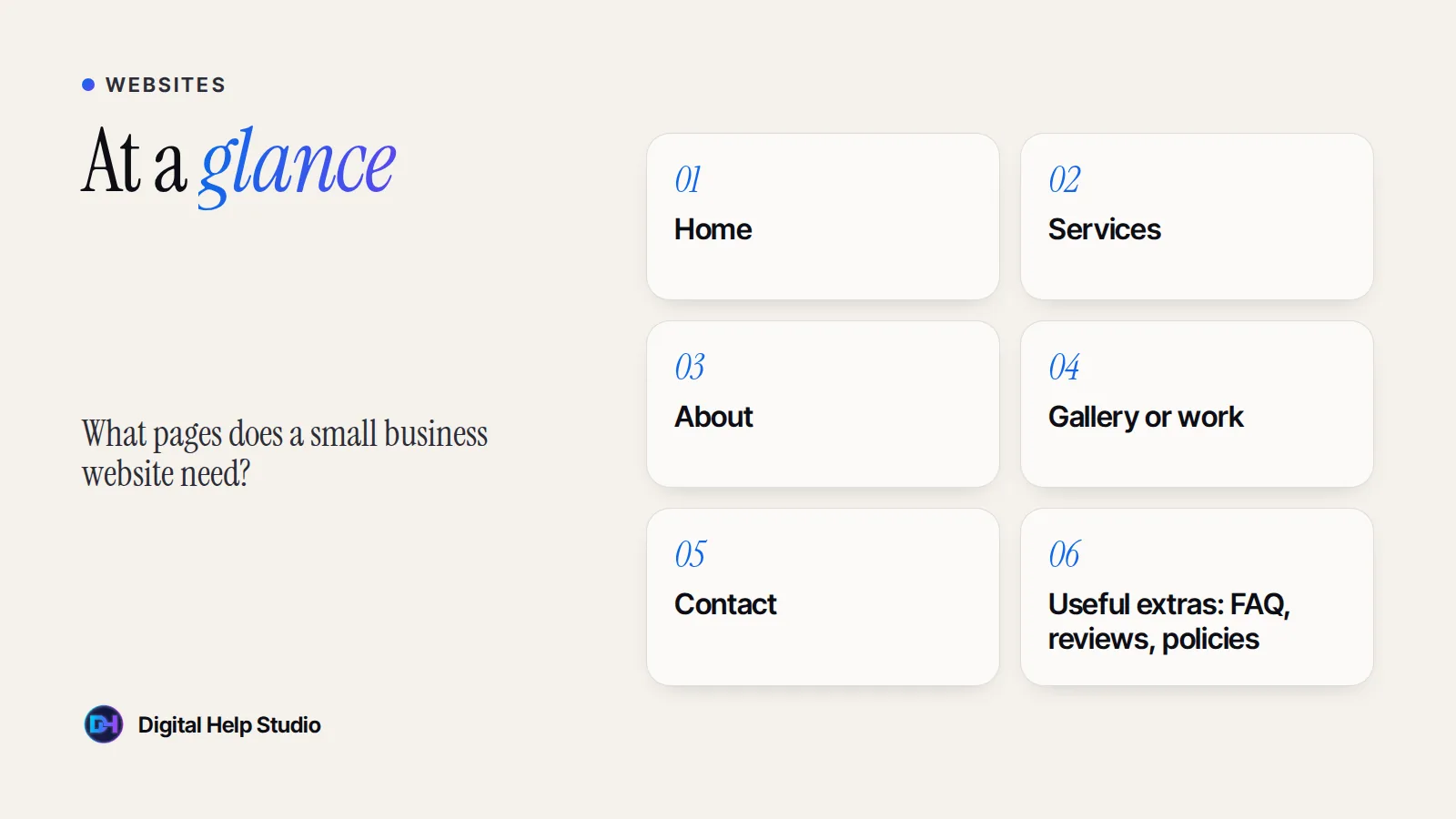
Your home page has a few seconds to tell visitors they’re in the right place. Include:
Explain each service in plain language: what it is, who it’s for, what’s included and what happens next. If you offer very different services, give each one its own section or page — this also helps you appear in more search results.
People buy from people. Share who you are, why you started, your experience and how you work. A real photo of you or your team makes a big difference. Keep it honest: no invented awards, clients or numbers.
Show, don’t tell. Photos of your products, your space, before-and-after results or completed projects help customers picture working with you. Use your own images, optimised so they load quickly on phones.
Make contacting you effortless. Offer more than one option — an enquiry form, WhatsApp, phone and email — and include your location, service area and opening hours where relevant.
| Page | When it helps |
|---|---|
| FAQ | You answer the same questions again and again. |
| Reviews | You have genuine reviews you have permission to share. Never invent testimonials. |
| Pricing | Your prices are fixed and simple. If every job is different, a “request a quote” approach works better. |
| Booking | You take appointments — a link to a trusted booking tool is often enough. |
| Blog or guides | You can write helpful articles regularly that your customers search for. |
| Policies | You collect personal data through forms or take payments. A privacy policy is usually needed; terms and refund policies help set expectations. Requirements depend on where you operate. |
A one-page website or landing page works well when you offer one main service, run a focused campaign or need something online quickly. A multi-page website is better when you offer several services, want to appear in more search results or have lots of work to show. Many small businesses start with three to five pages and add more later.
I design and build one-to-five-page websites for small businesses, write the content with you and set up the basics above properly. See a free demo of your site first, then decide.
Custom, hand-coded websites and landing pages for small businesses, starting with a free personalised demo.
See the service
Brijaditya Sharma is the founder of Digital Help Studio. After nine years in-house handling content distribution for an Indian brand, he now builds websites and runs digital marketing for small businesses worldwide. Connect on LinkedIn.
Most small businesses do well with one to five pages: Home, Services, About, Gallery or Work, and Contact. You can add more as your business grows.
If your site collects personal information — for example through a contact form — a privacy policy is generally expected and often legally required. Rules depend on where you and your customers are, so check what applies to you.
If your prices are simple and fixed, publishing them can save time. If every job is different, explain what affects the price and invite people to request a quote.
Keep reading
Instagram is great for discovery, but it isn’t yours. What a website does that social media can’t — and when you might not need one yet.
Read article
Eight practical steps to help nearby customers find your business on Google and Google Maps — from your Business Profile to honest reviews.
Read article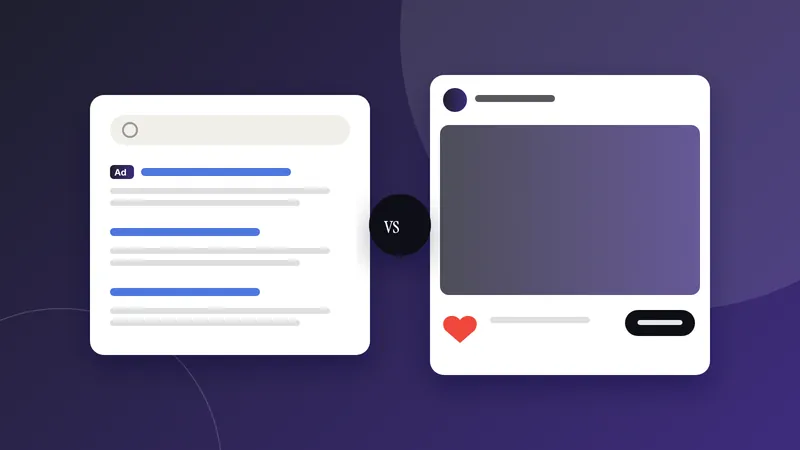
Search intent vs discovery: how Google and Meta ads differ, which suits your business, and what to prepare before spending anything.
Read articleYour next step
Send me your business details or your Instagram link. I’ll build a free, personalised website demo — no payment, no obligation.